
Home » Close Protection
Close Protection
Close protection is a professional security function focused on protecting individuals from relevant security risks.
Close protection assignments can involve executives, business leaders, public figures, celebrities, diplomats and other individuals whose circumstances require dedicated protective arrangements.
The work can vary considerably depending on the client, location, threat environment, employer and legal framework in which the assignment takes place. Some assignments may involve routine daily movements and travel, while others can involve more complex or higher-risk environments.
Close protection is also broader than simply being physically present beside a client. Depending on the assignment, professionals may contribute to planning, preparation, advance work, communication, movement coordination, risk management and other protective responsibilities.
This guide provides an overview of the close protection profession, including the role of a close protection officer, career paths, training, employment, compensation and the realities of the work.
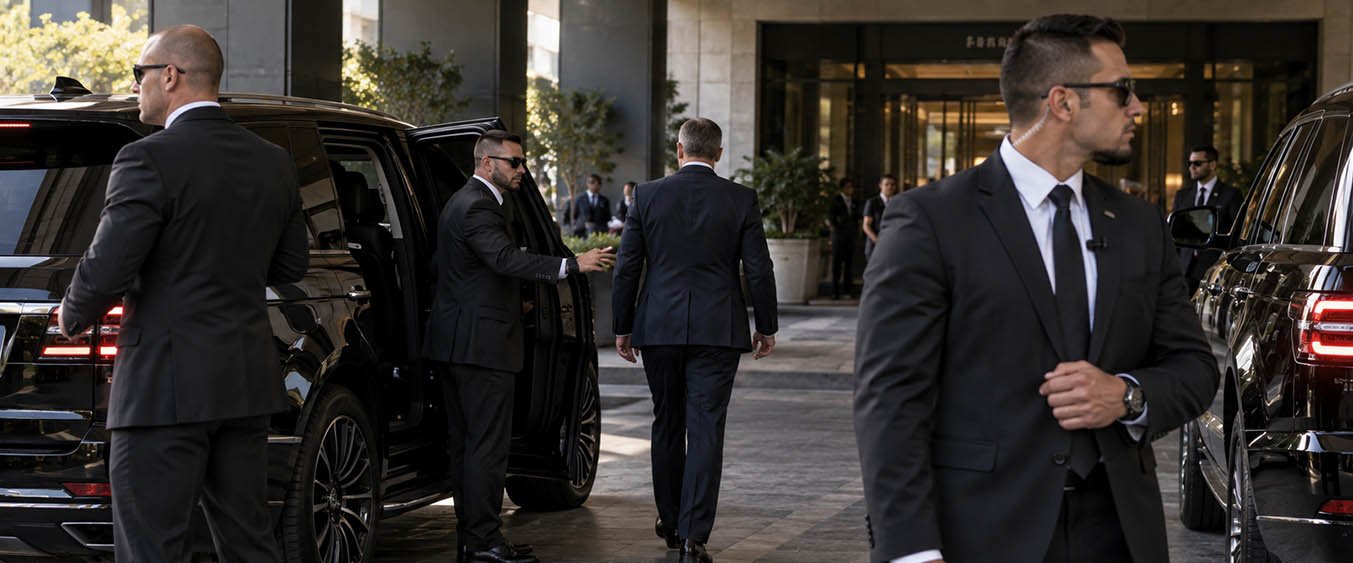
Table of Contents
What Is Close Protection?
Close protection is a professional approach to protecting an individual from identified or potential security threats.
The exact nature of close protection varies according to the assignment. Factors such as the client’s profile, activities, travel requirements, location and security environment can influence how protection is organized.
Close protection can be used in a range of circumstances, including:
- Executive and corporate environments
- International travel
- Public appearances
- Private events
- Diplomatic environments
- High-profile engagements
- Residential movements
- Higher-risk environments
The terminology and legal requirements surrounding close protection also vary between countries.
If you plan to work in a specific country, you should always check that country’s licensing, immigration and legal requirements. These requirements are specific to that jurisdiction and may apply depending on your employment status and the type of work you intend to perform.
For international assignments, overseas contracts and higher-risk protective work, there is no single worldwide licence that qualifies you to work everywhere. In these markets, employers typically assess your training, experience, operational background and suitability for the specific contract.
A local licence can still be valuable when working in that country, but it should not be confused with an international qualification. For someone building an international security career, the foundation is quality training, relevant experience and a strong professional network.
What Does a Close Protection Officer Do?
A Close Protection Officer (CPO) contributes to the protection of a client as part of a professional protective arrangement.
The exact responsibilities depend on the assignment, but may include:
- Protecting the client during movements and activities
- Supporting protective planning
- Conducting or contributing to advance work
- Maintaining situational awareness
- Coordinating with other members of the protection team
- Supporting secure movements and transportation
- Maintaining communication with the team
- Monitoring changes in the operating environment
- Responding appropriately to incidents
- Maintaining professional standards throughout an assignment
The role can also involve substantial preparation and coordination that is not visible to the client or public.
Professional close protection is therefore not simply about reacting to an incident. Planning, preparation, communication and coordination can all form part of the work.
Where Is Close Protection Used?
Close protection can be adapted to different clients, environments and levels of security concern.
Executive Protection
Executives and business leaders may require dedicated protective arrangements because of their profile, activities, travel requirements or specific security circumstances.
Executive protection can involve visible or discreet protective arrangements depending on the assignment.
VIP and Celebrity Protection
Public figures and celebrities can have security requirements associated with public appearances, travel, events and other activities.
Protection arrangements can therefore need to accommodate both security requirements and the client’s normal professional or personal activities.
Dignitary Protection
Government officials, diplomats and other dignitaries can require protective arrangements during travel, public engagements or other activities where security considerations are elevated.
The specific responsibilities and legal framework depend on the assignment and jurisdiction.
International and Higher-Risk Assignments
Some close protection professionals work internationally or in environments presenting more complex security conditions.
These assignments can involve additional preparation, coordination and experience depending on the specific operational requirements.
Close protection can also overlap with other protective security disciplines in certain environments.
Close Protection Roles
Close Protection Officer is the central professional role, but protective teams can contain different positions depending on the organization and assignment.
Potential roles can include:
- Close Protection Officer
- Team Leader
- Advance personnel
- Security Driver
- Protective Surveillance Specialist
- Security Manager or Coordinator
Not every protective team uses the same structure, and job titles can differ between organizations and countries.
A job title alone therefore does not necessarily describe the full responsibilities of an assignment.
As professionals gain experience, they may pursue additional responsibilities or specialist roles depending on their qualifications, experience and the opportunities available to them.
How to Become a Close Protection Officer
There is no shortcut into professional close protection. Like any serious career, you start somewhere, build your experience, complete relevant training and gradually work your way toward more demanding assignments.
Many professionals enter close protection with a background in the military, law enforcement or civilian security. Others build their experience through roles such as security guarding, events, residential security or door supervision before progressing into close protection and bodyguard work.
Training is important, but a certificate alone does not make an experienced protection professional. Practical experience, professionalism, reliability and your professional network are equally important. The people you work with, the reputation you build and the experience you gain can have a major influence on the opportunities available to you.
As your experience develops, you can progress from lower-risk protection assignments into executive protection, international work, high-risk PSD and other specialist security roles. The requirements become increasingly demanding, and many higher-level contracts require several years of relevant experience and a proven operational background.
You will often see people complete a PSD or PMC course and immediately expect to be hired for high-risk work. In reality, training can open the door, but experience is what allows you to progress through it.
Start small. Train properly. Build experience. Build your network. Keep progressing. There is no shortcut.
Close Protection Training
Professional close protection training should provide a solid foundation in the knowledge, skills and professional standards required for protective work.
For people seeking international or overseas security opportunities, the value of training is not simply the number of days on a certificate. Employers and security companies may consider the training provider, course content, practical training, instructor experience, qualifications, professional background and overall credibility of the candidate.
Depending on the intended career path, training may cover areas such as:
- Protective security principles
- Close protection operations
- Risk awareness and threat assessment
- Protective planning
- Advance work
- Movement and transportation
- Team coordination
- Communication
- Medical and emergency response
- Professional conduct and client etiquette
- Scenario-based practical training
- Security operations in different environments
Additional specialist training may also be relevant depending on the role, location and employer.
Choosing a Close Protection Training Provider
Not all close protection courses are equivalent.
Candidates should look beyond the course title and consider:
- Who operates the training company
- The operational background and experience of the instructors
- Whether training is predominantly practical or classroom-based
- The standard and relevance of the training environment
- The qualifications or certificates issued
- Whether the organization is properly registered and established
- Relevant professional memberships, affiliations or industry recognition
- The company’s reputation within the security industry
- Whether the training reflects the type of work the candidate intends to pursue
For international work, training credibility and professional competence matter far more than simply collecting certificates.
Training and licensing requirements can still vary by country and assignment. Where a specific jurisdiction requires a licence or regulated qualification, candidates must comply with those local requirements. However, international security employers may have their own recruitment, qualification and experience requirements in addition to, or instead of, a local civilian security qualification.
Close Protection Careers
Close protection can form part of a wider career in the private-security industry.
People can enter the profession through different backgrounds and career routes, depending on the market in which they intend to work.
Career development may involve progression toward:
- More experienced CPO positions
- Specialist protective assignments
- Team leadership
- Executive protection
- Higher-risk protective work
- International assignments
- Security management
There is no universal progression structure.
Career development depends on factors such as experience, qualifications, professional performance, employer requirements and opportunities within the relevant market.
Close Protection Jobs
Close protection employment can take different forms depending on the market and employer.
Opportunities may include:
- Permanent positions
- Contract assignments
- International assignments
- Executive protection work
- Event and public-appearance protection
- Specialist protective assignments
The requirements for individual positions can vary considerably.
Some employers may require previous professional experience, particular qualifications or specific competencies, while other positions may have different requirements.
Anyone considering an opportunity should therefore assess the actual requirements of the individual position rather than assuming that one qualification or experience profile applies to every close protection job.
How Much Do Close Protection Officers Earn?
Close protection rates vary significantly depending on country, employer, experience, assignment type, risk level and level of responsibility. As an indication, lower-risk CPO or bodyguard work can range around $250–$390 per day, while experienced international and specialist protective roles can reach $500–$1,000+ per day. Senior PSD, high-risk, extraction or Team Leader positions can reach $1,000–$2,000+ per day on certain contracts.
Rates can also differ substantially between countries and employers, while experience, specialist training, previous deployments and the level of responsibility can have a major impact on what a professional can command. Contract length, rotation, accommodation, travel, insurance and other benefits can also affect the overall package.
These are illustrative contract rates, not guaranteed salaries. The actual rate depends on the specific role, employer, mission and contract conditions.
Close Protection vs Bodyguard
A bodyguard generally provides direct personal protection, often in visible environments such as events, public appearances, travel or crowd-heavy situations. The role may be performed individually or as part of a team.
Close protection is a broader and more structured protective discipline. A close protection team can be responsible for much more than physical presence around the client, including protective planning, advance work, risk assessment, route and venue preparation, team coordination, movement security and emergency response.
Close protection can range from low-risk executive protection to high-risk PSD and overseas protective operations, depending on the professional’s training, experience and assignment.
In simple terms: a bodyguard protects the person; close protection is a complete protective operation built around the person.
Close Protection vs PSD
Close protection and Protective Security Detail (PSD) can overlap, but they are not necessarily identical forms of protective work.
The terminology, responsibilities and operating environment can differ depending on the organization and assignment.
Close protection may focus primarily on the protection of a particular individual, while PSD can describe a broader protective security function, particularly in environments where movement, team structure and wider security considerations are significant.
The terms should therefore be understood in the context of the specific employer, mission and operating environment.
The Reality of Close Protection Work
The reality of professional close protection can differ substantially from the way the profession is portrayed in entertainment and popular media.
The work can involve:
- Long or irregular working hours
- Travel
- Extensive preparation
- Periods of low activity
- Professional and client responsibilities
- Team coordination
- Adapting to changing schedules
- Maintaining professional standards throughout an assignment
Not every close protection assignment is high-risk or action-oriented.
In many professional environments, protection involves preparation, discretion, planning and consistency rather than dramatic intervention.
Anyone considering the profession should understand the working conditions and responsibilities before deciding whether the career is appropriate for them.
Is Close Protection a Career?
Close protection can form part of a professional career in private security, but the nature of the work varies considerably between roles and markets.
People considering the profession should research:
- Local regulatory requirements
- Training requirements
- Employment opportunities
- Working conditions
- Career progression
- The type of assignments available
- The experience expected by employers
The profession should be evaluated on the basis of the actual work and requirements, rather than its portrayal in films, social media or marketing material.
FAQ
Common Questions About Close Protection
Close protection is the professional protection of individuals across a wide range of environments, from low-risk executive and VIP assignments to high-risk protective operations. Depending on experience and specialization, close protection professionals can progress into high-risk PSD, overseas deployments, extraction operations and other specialist security roles.
If you plan to work in a specific country, check its local licensing and legal requirements. For international assignments, events, overseas contracts or higher-risk PSD work, quality training and relevant experience are essential. Start by building solid experience in lower-risk roles, develop your skills and qualifications, and work your way up to more demanding assignments.
Rates vary widely by assignment. As an indication, basic close protection in lower-risk environments may pay around $250–$390/day, while experienced CPOs and specialist PSD personnel can earn $500–$1,000+ per day, with senior Team Leader roles on certain high-risk missions reaching $2,000+ per day.
Not exactly. A bodyguard generally refers to someone providing personal protection, often in visible environments such as events, travel or public appearances. Close protection is a broader professional discipline, typically involving structured planning, advance work, team coordination, risk management and protective operations. A bodyguard may work alone or as part of a team, while close protection teams are generally organized around a wider protective plan.
